The solar energy industry is growing rapidly as businesses, homeowners, industries, and institutions increasingly adopt solar power to reduce energy costs and support sustainable energy solutions. While installing solar systems creates new business opportunities, managing customers, installation projects, service requests, maintenance schedules, technicians, and Annual Maintenance Contracts (AMCs) can become challenging as a solar company grows.
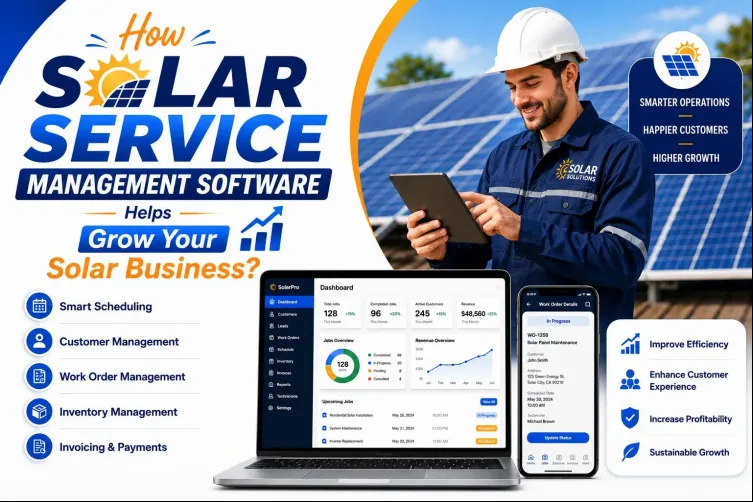
This is where Solar Service Management Software can make a significant difference. A dedicated software solution helps solar companies organize service operations, automate routine processes, improve customer communication, and manage field technicians from a centralized platform.
For growing solar businesses, Service Management Software for Solar Industry can improve operational efficiency while helping teams deliver faster and more reliable customer service. When combined with a Service CRM, it can connect customer management, sales, installation, service, maintenance, and after-sales support in one system.
What Is Solar Service Management Software?
Solar Service Management Software is a digital platform designed to help solar companies manage their complete service operations. It can be used by solar panel installers, EPC companies, distributors, solar maintenance providers, and renewable energy service businesses.
The software can manage customer information, solar system details, installation records, service requests, maintenance schedules, technician assignments, spare parts, contracts, invoices, and service reports.
Instead of managing these activities through spreadsheets, emails, messaging apps, and paper documents, companies can centralize their operations in one system.
Why Solar Businesses Need Service Management Software?
A solar business does not end its relationship with a customer after installation. Solar systems require regular inspection, cleaning, troubleshooting, component replacement, performance monitoring, and maintenance.
As the customer base increases, service teams may receive numerous complaints and maintenance requests. Without a structured process, companies may experience delayed responses, missed appointments, poor communication, and difficulty tracking technician performance.
Service Management Software for Solar Industry helps create a systematic workflow for handling these activities. From receiving a service request to assigning a technician and closing the job, every step can be tracked.
How Solar Service Management Software Helps Grow Your Business?
1. Centralizes Customer and Solar System Information
A centralized database allows solar companies to store customer details and complete system information in one place.
Teams can maintain records such as installation date, solar capacity, panel details, inverter information, site location, warranty, AMC status, and previous service history.
When a customer contacts the company, the support team can quickly access relevant information instead of asking the customer to provide the same details repeatedly.
2. Improves Service Request Management
Customers may contact solar companies for issues related to low power generation, inverter faults, panel damage, wiring problems, cleaning requirements, or other technical concerns.
Solar Service Management Software allows teams to register each complaint as a service request and assign a priority. Managers can monitor open, pending, assigned, and completed service requests from a centralized dashboard.
This structured approach reduces the possibility of missed complaints and improves response time.
3. Makes Technician Scheduling Easier
Field technicians are an important part of solar service operations. Managing technician schedules manually can become difficult when multiple service calls need to be handled in different locations.
The software helps managers assign jobs according to technician availability, skills, workload, and location. Technicians can access their assigned jobs and update the status after completing the service visit.
Better scheduling can reduce unnecessary travel and help technicians complete more jobs during the working day.
4. Strengthens Preventive Maintenance
Preventive maintenance is essential for keeping solar systems operating efficiently. Frequent inspections can assist in spotting any issues before they become serious failures.
With Solar Service Management Software, companies can schedule periodic maintenance, cleaning, inspections, inverter checks, electrical testing, and other service activities.
Automated reminders can help service teams ensure that scheduled maintenance is completed on time.
5. Supports AMC and Contract Management
Many solar companies provide Annual Maintenance Contracts to customers. Managing multiple AMCs manually can result in missed service visits or contract renewal dates.
A software platform can store contract information, service frequency, start and expiry dates, and scheduled maintenance activities.
Automated reminders help service teams follow up with customers before contracts expire, creating opportunities for renewals and recurring revenue.
6. Improves Customer Communication
Customer satisfaction is crucial to the expansion of businesses. Customers want timely updates about their service requests and appointments.
A Service CRM can help companies maintain organized communication throughout the service lifecycle. Teams can provide updates about complaint registration, technician assignment, scheduled visits, service completion, and follow-up requirements.
Better communication increases transparency and can contribute to stronger customer relationships.
7. Tracks Spare Parts and Inventory
Solar service operations may require inverters, connectors, cables, fuses, mounting components, switches, and other spare parts.
Poor inventory management can delay service completion. Solar service software can help businesses monitor stock availability, parts consumption, purchase requirements, and items used during specific service jobs.
This allows service managers to plan inventory more effectively and reduce unnecessary delays.
8. Provides Complete Service History
A digital service history provides valuable information about every customer’s solar system.
Service teams can view previous complaints, repairs, maintenance visits, replaced components, technician notes, and service dates. This information can help technicians understand recurring issues and resolve problems more efficiently.
A complete history also helps managers identify systems that require frequent repairs or replacement.
9. Improves Business Productivity
Manual administrative work consumes valuable time. Employees may spend hours updating spreadsheets, searching for customer information, coordinating technicians, preparing service reports, and following up on pending requests.
Automation reduces repetitive work and gives employees more time to focus on customers and business development.
Improved productivity means a company can potentially manage more customers without increasing administrative workload at the same rate.
10. Helps Generate More Revenue
Solar service management software is not only about improving operations; it can also support revenue growth.
Companies can use customer and service data to identify opportunities for AMC renewals, additional maintenance services, component replacements, system upgrades, and other related services.
A well-managed after-sales service operation can increase customer retention and create recurring revenue opportunities.
Role of Service CRM in Solar Business Growth
A Service CRM connects customer relationship management with service operations. For solar companies, this can create a complete customer lifecycle from lead generation and sales to installation, maintenance, and after-sales service.
Sales teams can manage leads and customer details, while service teams can access equipment information and maintenance history after installation. This creates better coordination between departments.
For example, when a customer purchases a solar system, the system details can be recorded in the CRM. After installation, preventive maintenance schedules and warranty information can be added. If the customer later raises a complaint, the service team can access the complete customer and equipment history before assigning the job.
Benefits of Service Management Software for Solar Industry
A dedicated solar service management platform can provide several benefits:
· Faster complaint resolution
· Better technician productivity
· Improved preventive maintenance
· Centralized customer records
· Better AMC management
· Reduced service delays
· Improved spare parts tracking
· Accurate service reports
· Better customer communication
· Increased customer retention
· More recurring service opportunities
· Improved management visibility
These benefits can help solar businesses create scalable and professional service operations.
Choosing the Right Solar Service Management Software
Before selecting a software platform, solar companies should consider their current service requirements and future growth plans.
Important features may include customer management, solar asset tracking, service request management, preventive maintenance scheduling, technician management, AMC management, inventory tracking, mobile access, service reports, dashboards, and CRM integration.
The software should also be user-friendly so that office staff, managers, technicians, and customers can use the relevant features without unnecessary complexity.
Conclusion
Growing a solar business requires more than acquiring new customers. Companies must also provide reliable installation, maintenance, and after-sales support to build long-term customer relationships.
Solar Service Management Software helps solar businesses organize service requests, schedule technicians, manage preventive maintenance, track spare parts, monitor AMCs, and maintain detailed customer and equipment records. Meanwhile,AMC Service Management Software for Solar Industry provides a structured way to manage growing field service operations.
When integrated with a Service CRM, solar companies can connect sales, customers, installations, maintenance, and after-sales service within one centralized platform.
By automating service processes and improving customer communication, solar businesses can reduce operational inefficiencies, increase productivity, strengthen customer satisfaction, and create new opportunities for sustainable business growth.
